The problem with mouse models
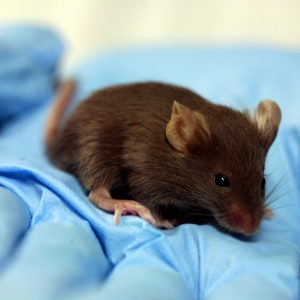 For each entry in this blog, I have endeavoured to provide a list of references to the most relevant recent studies in an attempt to help the reader judge research evidence for themselves. Many of these studies are animal studies – usually mouse model studies. Unfortunately, proof of concept in mice or other small animals does not guarantee that the breakthrough will translate to human cases of dementia. In fact in 2010 it was estimated that 90 per cent of drugs which came about through mouse models go on to fail in human clinical trials, and those figures are likely to be even worse for drugs targeting dementia, given the astronomic failure rate of Alzheimer’s treatments.
At the time of writing this page, the media has been flooded once again with a headline that has become very familiar indeed to those of us who follow research into Alzheimer’s and dementia treatments: ‘Scientists Reverse Alzheimer’s in Mice‘. In this case, the story refers to a new generation of BACE inhibitor drugs which do indeed look very exciting, but the reporter has fallen into an age-old trap.
Here’s why –
With one or two rare exceptions mice do not get Alzheimer’s Disease. As such, headlines stating that scientists have reversed the disease in mice is simply not true. For a start, the brain of a mouse is so different to ours that we can not realistically say that the mouse ever had Alzheimer’s Disease in the first place.
Scientists work instead with mouse ‘models’ – genetically modified animals that are bred to develop symptoms that mimic Alzheimer’s in humans. These transgenic mice usually have one of the genetic mutations responsible for early onset familial Alzheimer’s in humans – PSEN1, PSEN2, or one of the APP mutations which are present in my own family. These mice develop amyloid plaques and the associated cognitive impairment, although generally do not develop the tau tangles which we see in human Alzheimer’s cases, and many mouse models experience no or limited neuronal loss.
If one… tried to understand a station wagon by studying a motorcycle, one would learn something about wheels and spark plugs but have no idea about steering wheels, airbags, and sunroofs, and the larger picture would be substantially missed
– Warren et al, 2015
Mouse models are still a hugely important part of the research picture, and whilst it would be foolish to rely on them as a faithful replication of the disease phenotype in humans, nobody in the world of dementia research is doing that, in truth. Instead, misreporting of findings in the media, and lay people such as you and me – reading research papers pertaining to animal models without fully understanding the implications or contexts of these studies – are responsible for misrepresenting the work done by these scientists. Hopefully the readers of my blog will never fall into this trap!
Simply put, mouse models go some way – but by no means the whole way – to helping us understand the biological underpinning of the disease, and also how certain interventions may prevent or reverse the symptoms of Alzheimer’s, but a breakthrough in mice does not equal a breakthrough for human Alzheimer’s. As such, all animal studies must be taken with a very large pinch of salt. We mustn’t lose faith, but nor must we get too excited at the publication of every new mouse model study.
References
Elder GA, Gama Sosa MA, De Gasperi R. Transgenic Mouse Models of Alzheimer’s Disease. The Mount Sinai journal of medicine, New York. 2010;77(1):69-81. doi:10.1002/msj.20159.
van der Worp HB, Howells DW, Sena ES, Porritt MJ, Rewell S, O’Collins V, et al. (2010) Can Animal Models of Disease Reliably Inform Human Studies? PLoS Med 7(3): e1000245. doi:10.1371/journal.pmed.1000245
Warren HS, Tompkins RG, Moldawer LL, et al. Mice are not men. Proceedings of the National Academy of Sciences of the United States of America. 2015;112(4):E345. doi:10.1073/pnas.1414857111.
Recent Comments