What and why?
This one should really need no introduction – it’s something we have all been doing from the day we were born – in fact we spend a third of our lives flat out unconscious. Getting as little sleep as possible, however, has become something of a badge of honour in recent times, and the average amount of time we spend asleep has been steadily declining over the decades. There is an increasing body of evidence that this is having a dramatic impact on our physical and cognitive health. Perhaps it is no coincidence that Ronald Reagan and Margaret Thatcher, two national leaders who both boasted of how little sleep they needed during their terms of office, both ended their days with Alzheimer’s.
 Evidence
One of the most important discoveries linking sleep duration and quality to Alzheimer’s risk was made by Danish neuroscientist Maiken Nedergaard in 2013. Nedergaard discovered an intercellular pathway which clears cell waste from the brain. She named this pathway the ‘glymphatic system’, a nod to the lymphatic system which plays a similar role in the rest of the body. Although this system is minimally active at all hours, it is during deep, non-REM phase (nREM) sleep that it really kicks into action. During this phase of sleep, our brain cells physically shrink – astonishingly by up to 60% – allowing cerebrospinal fluid (CSF – the clear stuff taken during a lumbar puncture) to wash through the brain and clear away metabolic waste products built up during the normal functioning of our neurons. One such waste product is amyloid beta – clumps of which in the brain are often the harbinger of dementia. Without sufficient nREM sleep, the brain is not able to clear these proteins, and yet a symptom of dementia is disrupted and low quality sleep, which means this becomes a vicious self-sustaining cycle, allowing the proteins to continue building throughout the course of the disease.
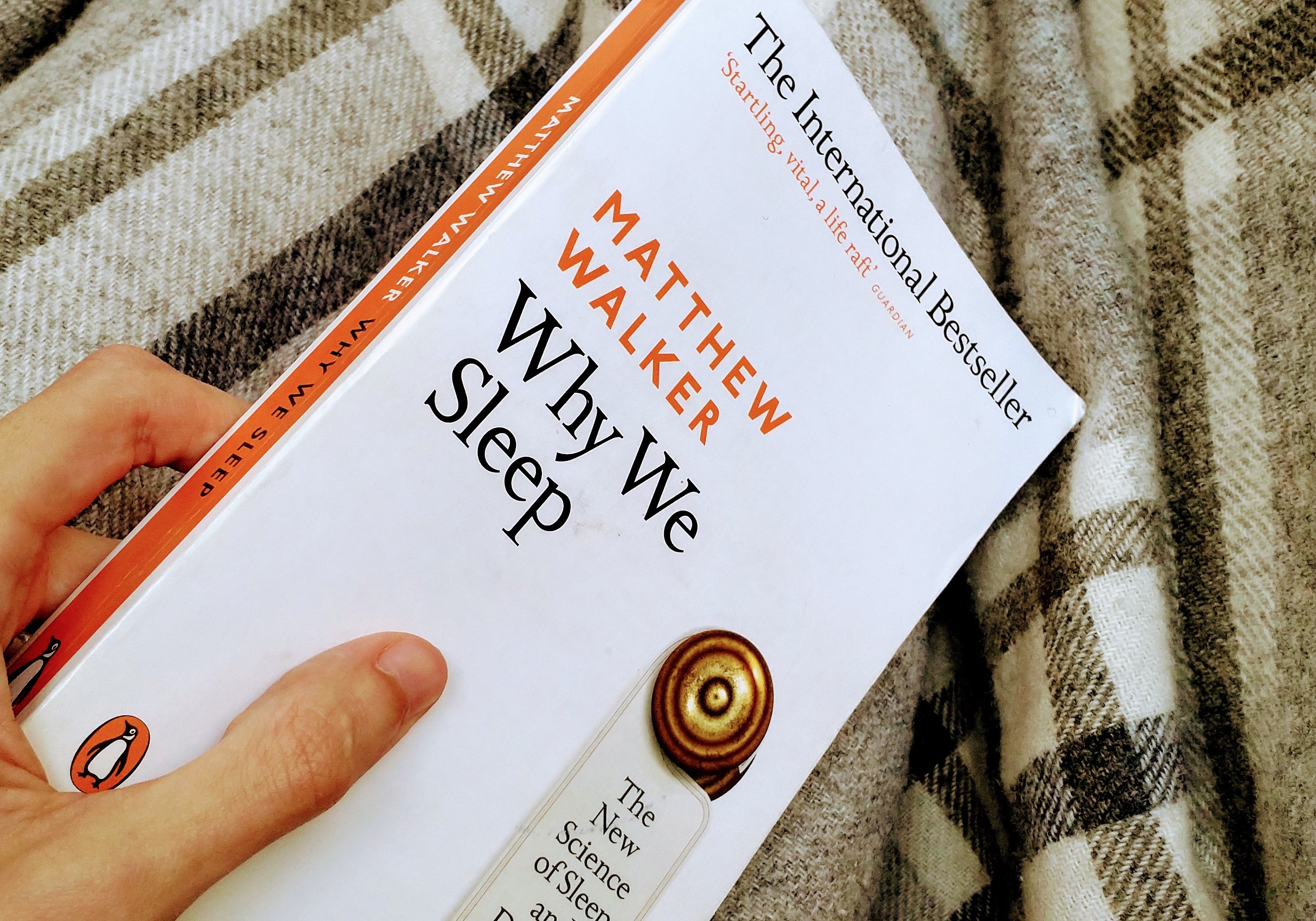
Matthew Walker, sleep scientist at UC Berkeley and author of the popular science book ‘Why We Sleep’, has contributed to research carried out by William Jagust and others at Berkeley which adds further depth to our knowledge and understanding of this ‘vicious cycle’ of sleep deprivation and dementia. They found that in the early stages of Alzheimer’s, it is the middle part of the frontal lobes of the brain – the medial frontal cortex – where some of the greatest deposits of amyloid beta plaques are to be found. By coincidence, it is also these parts of the brain which are responsible for triggering the non-REM (nREM) stage sleep referred to previously. This is a devastating relationship, because it is during this nREM stage that memories acquired during the day are transferred and consolidated in our long-term memory. The fact that older people are less able to fall into nREM stage sleep is therefore highlighted as the primary culprit explaining why memory fades as we age, but the nREM-limiting power of amyloid proteins in the medial frontal cortex speeds up this process, damaging our ability to form memories and also to clear new deposits of amyloid. It truly is a toxic, destructive vicious cycle.
From this, we can really only draw one conclusion. Getting too little sleep over the entire course of your life will significantly increase your risk of developing Alzheimer’s Disease. A lack of sleep will significantly hamper your brain’s natural ability to clear itself of the amyloid protein deposits which signify the beginning of the cascade leading to disease symptoms. As these deposits grow, the body is decreasingly able to fall into nREM-stage sleep, which in turn plays a role in a person’s inability to clear new amyloid deposits and also, crucially, to form and consolidate new memories. For those already showing signs of the disease, fixing disrupted sleep patterns is a hugely promising therapeutic pathway that will require more investigation – for the rest of us, the message is clear – don’t skimp on the good stuff!
How?
First, the easy stuff – we can dramatically improve the quality of our sleep by ensuring that we don’t consume caffeine in the few hours before bedtime, that we limit our access to electronic devices and electric light, that we gradually relax by reading or doing calming activities before bed – none of this feels like a big effort for most people, but these small changes can dramatically improve the quantity and quality of our sleep.
Now for the trickier change. In his book, Walker suggests that everyone gives themselves at least eight hours ‘sleep opportunity’ a night – time spent in bed, in the dark, with no distractions. This should become a routine so that you go to bed and wake up at roughly the same time, naturally, every day – thus avoiding the ‘sleep rebound’ effect that many working people experience when they attempt to catch up with lost sleep from the working week during the weekend. A consistent sleep pattern such as this ensures a good spread of REM and nREM sleep, ensuring that amyloid is cleared from your brain and, during nREM sleep, memories can be effectively transferred into your long term memory.
During the week, my alarm goes off at 6am, which means I have to be in bed with the light off by 10pm each night to give myself an eight hour sleep opportunity. This is very much easier said than done. I often won’t get home until 6pm, and to give myself a chance to see friends and cook and eat dinner feels very rushed indeed in those four hours of free time. Whether or not it is sustainable for me to stick to that routine for the long term is very much in doubt. That said, for the couple of weeks where I stuck religiously to this routine, I invariably felt much better during the daytime. I was alert throughout the day, felt less ‘brain fog’ during my working day, and then was better able to focus on reading or other leisure activities during personal time in the evening. The benefits were clearly plain to see. If the long term effects on my memory were as stark, this would really be a no-brainer – for want of a better expression (!)
We’ve seen that the evidence is building up that sufficient sleep every night of the week is one of the strongest predictors of physical and cognitive well-being, and helps our brains to clear the toxic amyloid beta protein which is the harbinger of the development of Alzheimer’s. It is now up to us as a society how and to what extent we are willing to ‘sacrifice’ our late nights to reap this reward.
References
Nedergaard M. Garbage Truck of the Brain. Science (New York, NY). 2013;340(6140):1529-1530. doi:10.1126/science.1240514.
Helfrich RF, Mander BA, Jagust WJ, Knight RT, Walker MP. Old Brains Come Uncoupled in Sleep: Slow Wave-Spindle Synchrony, Brain Atrophy, and Forgetting. Neuron 2018 Jan 3;97(1):221-230.e4. doi: 10.1016/j.neuron.2017.11.020.
Walker, MP. Why We Sleep: The New Science of Sleep and Dreams
Recent Comments