What and why?
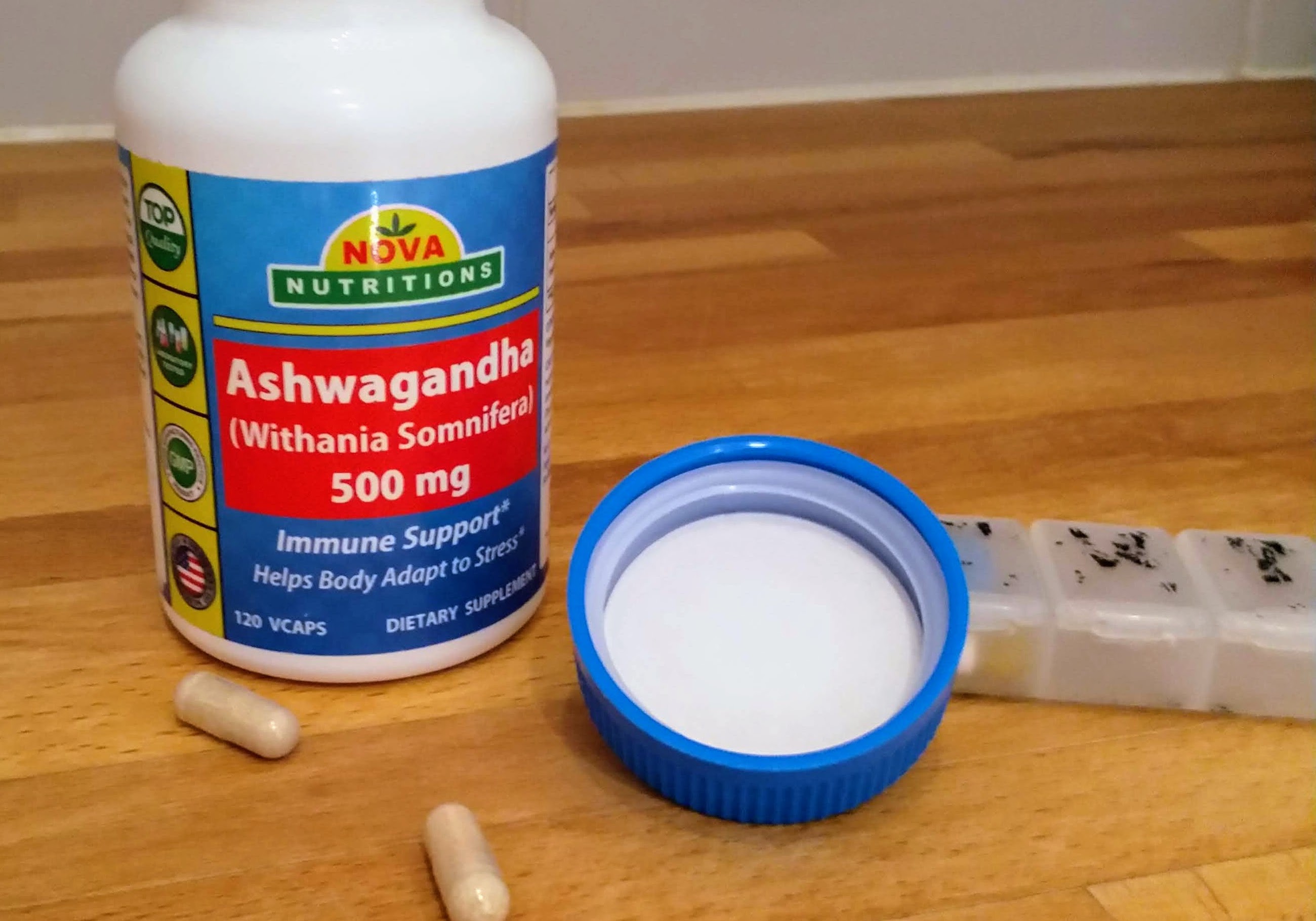
Ashwagandha is a common name for the plant Withania somnifera (WS). It has been used for centuries in traditional Indian medicine (Ayurveda) to treat conditions ranging from anxiety to erectile dysfunction. It was brought to my attention along with a number of other herbal and Ayurvedic supplements by Dr Dale Bredesen in his book ‘The End of Alzheimer’s: The First Programme to Prevent and Reverse the Cognitive Decline of Dementia
Evidence
First, let’s look at the high quality, double-blind studies into the efficacy of WS in human subjects. In 2014, a small double-blind placebo-controlled trial found that WS supplementation at 250mg twice daily over two weeks significantly improved reaction time in healthy young men. Another controlled study in 2013 found that patients with bipolar disorder treated with 500mg per day experienced greater improvements in specific measures of reaction time, working memory and social cognition compared to participants receiving a placebo. That’s it for the human studies.
Results from some animal studies, however, have shown some very promising and exciting results. Between 2005 and 2006, a group of Japanese researchers led by Tomoharu Kuboyam demonstrated that WS extracts induced neurite outgrowth in rat neurons which had been cultivated in-vitro (in a petri dish). They also showed some evidence that oral administration of WS extracts significantly improved memory deficits in mice that had been injected with human amyloid beta, and prevented loss of axons, dendrites, and synapses in those animals.
Building on these results, Sehgal et al (2012) sought to address whether these same WS compounds could reverse the behavioural and pathological characteristics of AD. They found that a thirty day dose of WS extract reversed the accumulation of beta-amyloid peptides (Aβ) and oligomers in the brains of middle-aged and old transgenic mice, and did indeed turn back behavioural changes in these animals. Most excitingly, the mechanism by which this happened was an upturn in the expression of a liver enzyme known as low-density lipoprotein receptor-related protein 1 (LRP1), which is known to be associated with clearing amyloid oligomers from the brain. The therapeutic effect of WS was not, therefore, reducing the production of Aβ, but rather helping an enzyme naturally found in the body to break down toxic oligomers from the brain.
It should go without saying that the usual caveats about animal studies apply here, and none of these results have yet been conclusively replicated in human subjects. Transgenic mice show symptoms of Alzheimer’s because they are modified to produce large quantities of sticky amyloid protein, but the disease in humans is more complex than this, and accumulation of amyloid plaques in the brain starts as much as 20 years before the onset of symptoms in humans. As such, any WS-derived therapeutic agent would need to be prescribed from middle age in the general population. Nevertheless these results may still open up a new therapeutic pathway. Targeting the clearance of amyloid beta, rather than targeting the amyloid beta itself, bypasses the complications of developing drugs that cross the blood-brain barrier.
How?
Many different healthfood and supplement companies offer their own brand of Ashwagandha supplements. Because the herbal supplement market is very much unregulated, the sourcing, organic status and packaging of these differ quite widely, as does the dosing available. I plumped for Nova Nutritions 500 mg capsules
I take one capsule with my midday meal, and then another just before bed. It has been suggested that Ashwagandha helps to induce sleep, hence the Latin species name somnifera. My total daily dose therefore totals 1,000mg (1g).
As for the benefits, I can only offer my own anecdotal experience. For the first couple of weeks I did wake up more aware that I had been dreaming, and it may well the case that the herb had some impact on the REM stage of my sleep, suggesting that it could potentially be impacting upon my brain chemistry in some way.
The many health benefits claimed for Ashwagandha on the wide variety of ‘natural health’ websites range from improving immune function to boosting testosterone levels and thus improving physical stamina. I am not able to speak to whether or not the supplements are capable of achieving these results. I would suggest taking most of these claims with a large pinch of salt until further clinical studies show a direct causative link. My thyroid function and blood sugars were in the normal range before I started taking the supplement and so even though there is some limited evidence that it may help in these areas, I am not able to speak to these effects.
Of course, if Ashwagandha is clearing amyloid proteins from my brain, it would do so silently. Without an expert examining my MRI scans, plasma and CSF levels, I am not able to say whether or not it is having any impact on me. That said, I have experienced no negative side effects from taking Ashwagandha. Long-term safety has not been the subject of clinical studies, but some small clinical trials lasting 30–60 days with daily doses between 300 and 1,250mg have reported that ashwagandha is well-tolerated with few side effects in the general population. Taking on board the extremely positive and exciting animal study results, I place this herbal supplement very much in the ‘well, it’s worth a try!’ category.
References
Chengappa, KN Roy, et al. “Randomized placebo-controlled adjunctive study of an extract of Withania somnifera for cognitive dysfunction in bipolar disorder.” The Journal of clinical psychiatry 74.11 (2013): 1076-1083. doi:10.4088/JCP.13m08413
Kuboyama, Tomoharu, Chihiro Tohda, and Katsuko Komatsu. “Withanoside IV and its active metabolite, sominone, attenuate Aβ (25–35)‐induced neurodegeneration.” European Journal of Neuroscience 23.6 (2006): 1417-1426. doi:10.1111/j.1460-9568.2006.04664.x
Pingali, Usharani, Raveendranadh Pilli, and Nishat Fatima. “Effect of standardized aqueous extract of Withania somnifera on tests of cognitive and psychomotor performance in healthy human participants.” Pharmacognosy research 6.1 (2014): 12. doi:10.4103/0974-8490.122912
Sehgal, Neha, et al. “Withania somnifera reverses Alzheimer’s disease pathology by enhancing low-density lipoprotein receptor-related protein in liver.” Proceedings of the National Academy of Sciences 109.9 (2012): 3510-3515. doi:10.1073/pnas.1112209109
Recent Comments