
What and why?
Vitamin D is synthesised naturally in the body when it comes into contact with the UV radiation from sunlight. A lack of vitamin D has normally been associated with those of us unlucky enough to live very far north, or who have access to minimal sunlight during their working day, but in recent years the success of campaigns encouraging people to cover up and stay out of the sunshine has resulted in deficiency becoming more common, even in countries bathed in sunshine.
The link between vitamin D deficiency and some health conditions has been known for some time – individuals lucky enough to live here in Scotland alongside me are at significantly increased risk of MS, for example – but the extent to which Vitamin D deficiency might increase an individual’s risk of other conditions such as dementia is still under-researched at this stage.
Evidence
In 2014, a large study published in the journal Neurology brought the possibility of a relationship between vitamin D deficiency and increased Alzheimer’s risk very much into focus. It found that individuals with a very low blood level of vitamin D were more than twice as likely to go on to develop dementia than those with normal blood concentrations of the vitamin. Many newspapers jumped on this research and wrote articles that at least implied that supplementing vitamin D in the general population could reduce their risk. This should be ringing serious alarm bells for those with a knowledge of the research process. For a start, though the study certainly highlighted an alarming correlation, at this point there is only limited evidence to suggest causation – or put another way, perhaps people with dementia might have low vitamin D for other reasons, or there might be some secondary process at play which we do not yet understand. To add to this note of warning, some other studies have found that there is no significant relationship between vitamin D levels and dementia risk, and that supplementation should only be considered if a patient has very low blood levels of the vitamin.
As such, there is only very minimal evidence to suggest that supplementation can reduce the risk of developing dementia at this stage. This does not mean that there is no benefit from supplementing, however, and healthy vitamin D levels may well be beneficial for individuals in a number of other ways, for example keeping bones strong and healthy – almost certainly a benefit for older people more prone to falls.
How?
There seems to be some debate over just how much vitamin D each person needs, though the US Government (via the National Institutes of Health) state that adults age 70 and younger need 600 international units (IU) of vitamin D daily, and adults over age 70 need 800 IU daily.
In most countries in the world, the majority of people should be able to get all the vitamin D they need from sunlight on their skin – usually about 15 minutes on bare skin of the arms. In the UK, the NHS advise that this is generally the case from late March/early April to the end of September, although this may not be true for those of us who live in the northernmost parts of the country. Vitamin D occurs naturally in only a few foods, including fatty fish and fish-liver oils – perhaps you are already taking fish oil for its possible cognitive benefits. The most common dietary sources of vitamin D are fortified foods, which depending on your market may include milk, breakfast cereals, fruit juices etc. For vegans, mushrooms and fortified non-dairy milks seem to be the best sources.
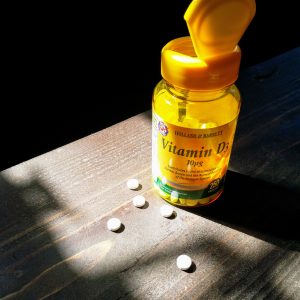
As a general rule, I would prefer to get nutrients from food than a pill, but in this case a single tiny white vitamin D3 pill with my morning fish oil and allergy medication doesn’t feel too difficult. I take 10µg daily – about 400 IU, and keep my fingers crossed that I get the rest from fortified foods in my diet. Do you take more? Share your experiences!
References
Littlejohns TJ, Henley WE, Lang IA, et al. Vitamin D and the risk of dementia and Alzheimer disease. Neurology. 2014;83(10):920-928. doi:10.1212/WNL.0000000000000755.
Koduah, P., Paul, F. & Dörr, JM. EPMA Journal (2017) 8: 313. doi:10.1007/s13167-017-0120-8
Nourhashemi, Fati et al. “Cross-sectional associations of plasma vitamin D with cerebral β-amyloid in older adults at risk of dementia.” Alzheimer’s Research & Therapy (2018). doi:10.1186/s13195-018-0371-1
Recent Comments